


Blog - World Food Day 2025 “Rethinking Waste, Restoring Balance”

Blog No. 2925/PI - Written by -
Ruchira Nigam, Project Coordinator, Prithvi Innovations &
Ms. Anuradha Gupta, Founder General Secretary, Prithvi Innovations
Introduction
Every year on 16 October, the world observes World Food Day to raise awareness about hunger, food security, and sustainable agriculture. In 2025, as the FAO marks its 80th anniversary, the theme resonates more than ever: ensuring that every person has access to safe, nutritious food - while minimizing waste and restoring balance to our food systems. FAOHome
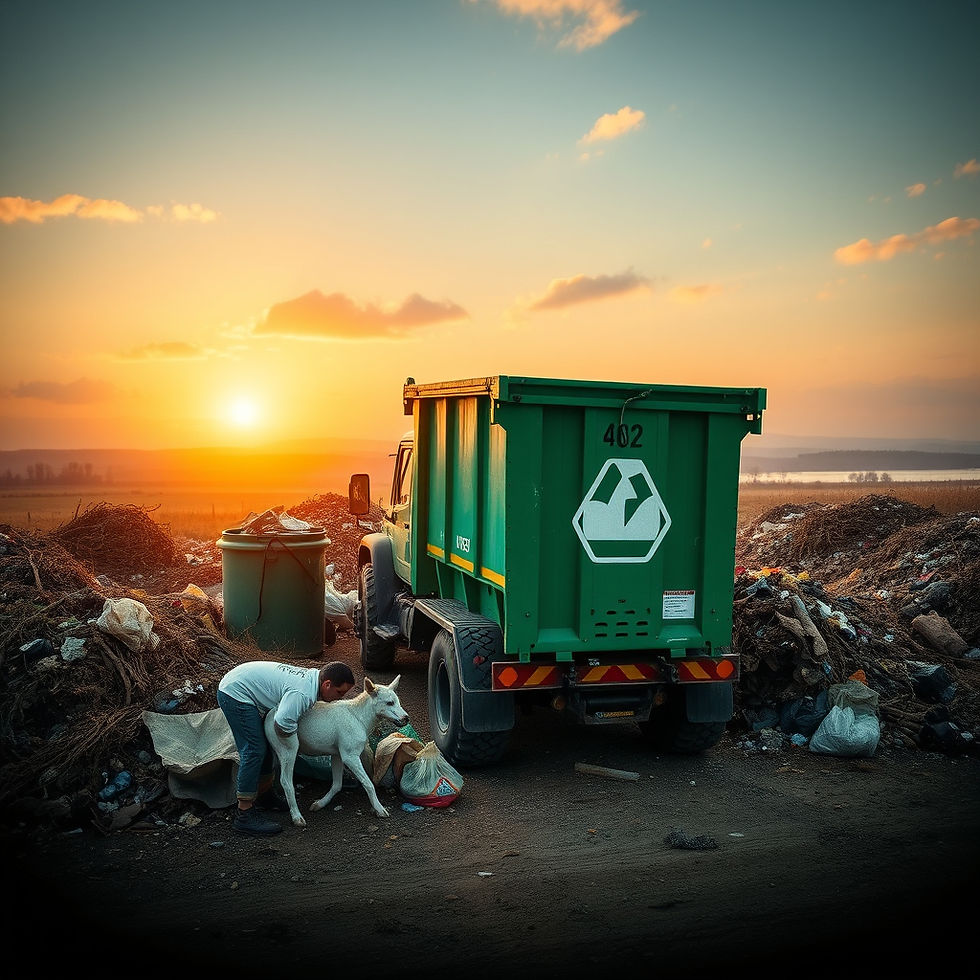
But as we celebrate food and farming, a harsh reality shadows the festivities: a large proportion of food produced never reaches a plate.

World Food Day 2025: A Call to Action
Hence every year not just on 16 October 2025, World Food Day, but throughout the year Prithvi Innovations works consistently through our ‘Be Foodwise & Leave no Foodprints” flagship program [https://www.prithviinnovations.org/annapoorna-rasoi] to not only raise awareness about reducing Food wastage , switching to healthy & sustainable diets & Food systems, coming together as a community to serve Food to the hungry to end hunger, & commit to real change by organizing sensitizing workshops, conducting Food Donation drives etc. [https://youtu.be/2Sy9d0SJUe8?si=3xsxEjY9ee0JrDJ9]
We address this challenge through our “Annapoorna Bank” [https://www.prithviinnovations.org/annapoorna-rasoi] initiative - a community-driven effort to reduce food waste, promote responsible consumption, and share surplus meals with those in need. The Annapoorna Bank collects, redistributes, and upcycles excess food from homes, hostels, canteens, and events, ensuring “no plate is wasted and no stomach stays empty.
Launch local “Food Rescue” initiatives
Host community workshops on food waste reduction
Encourage municipalities to audit food waste in public institutions
Use social media to share stories of zero-waste kitchens and initiatives
Because when food is lost, so too is opportunity - for nourishment, equity, and environmental balance.
Let’s make our kitchens, cities, and nations food-wise and waste-wise.

A quick glimpse at some basic data related to Food wastage, at Global, National, State & Local level (Lucknow),would certainly highlight the need and the urgency to act to ensure food security for all & to strive for Zero Food wastage.
The Global Food Waste Crisis
It is estimated that around 1.3 billion tonnes of food is lost or wasted globally each year - roughly one-third of all food produced. Wikipedia+2UNEP - UN Environment Programme+2
According to the UNEP Food Waste Index 2024, food waste occurs across households, retail, and food service sectors, with households typically contributing the majority. UNEP - UN Environment Programme
Globally, food loss and waste generate a heavy environmental burden — contributing to land degradation, water use, and significant greenhouse gas emissions. Wikipedia+1
The WFP reports that one-fifth of food produced for human consumption is lost or wasted, amounting to one billion meals a day. World Food Programme
Economically, the toll of food loss and waste is staggering — about USD 1 trillion annually globally. World Food Programme+2Future Agenda+2
These numbers cast a sharp contrast: in a world where hundreds of millions remain food insecure, we waste the equivalent of meals daily.
India’s Food Loss & Waste Landscape
India, despite being a leading agricultural producer, faces deep structural inefficiencies across its food system:
Indian households are estimated to waste around 50 kg of food per person per year, amounting to ~68.76 million tonnes in total. PubMed Central
Another source suggests that India wastes 74 million tonnes annually (as of recent estimates), which represents about 22 % of the country’s food production. transitionsresearch.org
The Food Waste Index Report 2024 estimates India’s household food waste generation to be about 55 kg per capita, with a total of 78.2 million tonnes wasted in households alone. wri-india.org
In the post-harvest and supply chain domain, losses are even greater. A WRI-India/ICAR estimate from 2014 valued post-harvest losses at INR 926.51 billion (USD ~15.19 billion). wri-india.org+1
Despite these sizable losses, India has not yet committed to a national target for reducing food waste, even as the SDG 12.3 target — halving per capita food waste by 2030 — looms ahead. wri-india.org+1
India’s paradox is acute: abundant production coexists with persistent hunger and systemic wastage.
What About Lucknow?
While detailed, city-level public data specifically for Lucknow’s food wastage is relatively scarce in the literature, a few local indicators hint at challenges common to many Indian cities:
Urban centers like Lucknow contend with retail and catering waste, especially in restaurants, markets, and religious or social events (e.g. weddings, festivals).
Food delivery, perishables in street markets, and unconsumed leftovers in households are potential hotspots for waste in a city of Lucknow’s size and growth.
Municipal solid waste data for Lucknow may report significant organic fraction (i.e. food/biodegradable waste), but raw food-waste vs general biodegradable waste is often not disaggregated publicly.
To get precise data, surveys by municipal bodies, academic institutions, or NGO collaborations focused on food loss/waste in Lucknow would be ideal. For planning or awareness campaigns, using national/household benchmarks and adapting them locally can be a useful proxy.
We are happy to state again that in all our internal & collaborative events, we, Prithvi Innovations try to plan and serve healthy food & works & work towards Zero Waste in Food through our various initiatives listed below. :
A. At Household Level
Plan meals & shop smartly
Use leftovers creatively
Compost food scraps
Use smaller plates, share meals
B. In Communities & Events
Organize “leftover collection” or redistribution (e.g. to shelters)
Use modular menus to minimize excess
Partner with food banks or NGOs
C. In Agriculture & Supply Chain
Invest in cold storage, better packaging, and logistics
Encourage on-farm processing & value addition
Strengthen aggregation models (Farmers’ Producer Organizations)
D. Policy & Institutional Measures
Set national and municipal targets aligned with SDG 12.3
Promote public–private partnerships for food banking and redistribution
Incentivize businesses (restaurants, caterers, retailers) for waste audits and reduction
E. Awareness & Education
Campaigns to shift attitudes toward “waste not”
School programs, quizzes, community contests on food waste
Use digital media and influencer partnerships to amplify messages



Very informative piece. Thanks